U.S. Startup Develops New Aircraft That Could Compete with Boeing and Airbus.
In a spacious hangar in the Mojave Desert, California, startup Jet Zero is building a full-scale demonstrator of a blended-wing-body aircraft that could reduce fuel consumption by up to 50%.
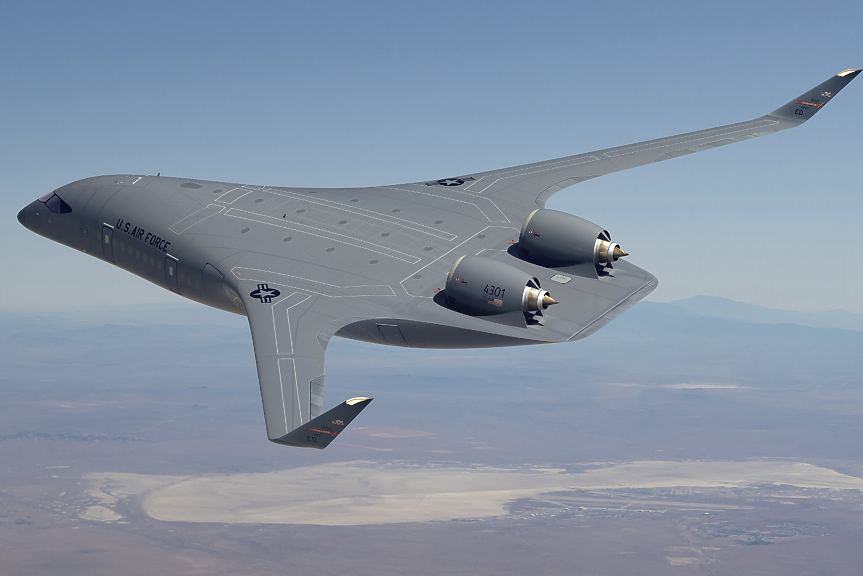
The test aircraft, which is expected to fly by the end of next year, marks a key stage in the California startup Jet Zero’s ambitious initiative to build the first commercial jet in which the fuselage and wings merge into a single lifting surface.
The design, resembling a manta ray, could reduce fuel consumption by up to 50%, the company claims. The project has already attracted early interest and investment from United Airlines and Alaska Airlines.
Air Force, is being built for Jet Zero by Scaled Composites, an aircraft developer owned by Northrop Grumman. It uses the same Pratt & Whitney engines that power the Boeing 757.
A full-scale demonstrator is currently being built in the Mojave Desert in California, with its first flight planned by the end of 2027. The aircraft uses the blended wing body concept, in which the fuselage and wings form one shared lifting surface.
A successful first flight could unlock additional investment and allow Jet Zero to develop commercial aircraft for production from 2030 at its newly opened manufacturing facility in Greensboro, North Carolina. However, this will depend on the certification schedule for the new design.
Jet Zero’s Z4 aircraft will target the middle segment of the market once served by Boeing’s 757 and 767 models — typically aircraft with 200 to 270 seats on medium- and long-haul routes.
Details of the demonstrator remain under wraps. The goal is to show whether this shape can generate lift with less aerodynamic drag, thereby reducing the thrust and fuel consumption required during cruise flight.
The development is already attracting attention across the aviation industry. Air Force is supporting the project with $235 million in funding.